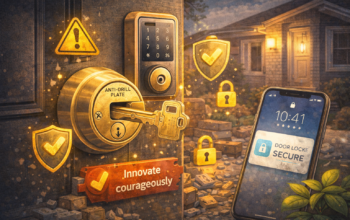
Lock picking is the art of manipulating a lock to unlock it without using its corresponding key. While it’s often associated with criminal activity, lock picking is a skill that can be learned and used for legitimate purposes, such as emergency lockout situations or testing the security of a lock.
However, lock picking also raises concerns about the effectiveness of high-security locks. If a skilled individual can pick a lock in seconds, then how secure is that lock? In this article, we’ll explore the relationship between lock picking and high-security locks.
To begin, it’s essential to understand that no lock is entirely impervious to lock picking. However, high-security locks are designed to make it extremely challenging and time-consuming to pick the lock successfully. The goal of high-security locks is to deter thieves and intruders from attempting to pick the lock and instead look for alternative entry points.
High-security locks achieve this level of security by incorporating advanced locking mechanisms and materials that are resistant to picking. For example, some high-security locks use pins that are specifically designed to make picking more difficult. They may also use multiple layers of pins or use magnetic or electronic locking mechanisms that are not susceptible to traditional lock picking techniques.
One emerging trend in high-security locks is the use of smart technology. Smart locks are electronic locks that can be controlled remotely using a smartphone app or other connected devices. They offer several advantages over traditional locks, including the ability to provide real-time notifications of lock activity, temporary access codes, and remote lock and unlock capabilities.
Smart locks can also be programmed to lock automatically after a specified period of time, eliminating the need to remember to lock the door manually. Some smart locks even use biometric technology, such as fingerprint or facial recognition, to provide an additional layer of security.
However, as with any new technology, smart locks have their own set of potential security risks. Hackers could potentially exploit vulnerabilities in the smart lock’s software, gaining unauthorized access to the lock and bypassing its security features. Therefore, it’s important to choose a reputable brand and regularly update the lock’s firmware to ensure that it remains secure.
Another emerging trend in high-security locks is the use of hybrid locking systems. These systems combine the strengths of multiple locking mechanisms to create a highly secure lock that is resistant to picking, drilling, and other forms of lock manipulation.
For example, a hybrid lock may use a traditional mechanical key system in conjunction with an electronic locking mechanism. The electronic mechanism can be programmed to lock or unlock the lock based on a pre-determined schedule or using a remote control, while the mechanical key system provides an additional layer of physical security.
When choosing a high-security lock, there are several factors to consider. First and foremost, consider the level of security that you require. If you are securing a commercial building, you may require a higher level of security than if you are securing a residential property.
Additionally, consider the type of lock mechanism that you prefer. Do you prefer traditional mechanical locks or are you comfortable with electronic locks? Finally, consider the cost of the lock, as high-security locks can range significantly in price, depending on their level of security and features.
In conclusion, lock picking and high-security locks have a complex relationship. While no lock is entirely immune to lock picking, high-security locks are designed to make it extremely challenging and time-consuming for a thief to pick the lock successfully. Emerging trends in high-security locks, such as smart technology and hybrid locking systems, offer additional layers of security and convenience.
When choosing a high-security lock, consider your security needs, the type of lock mechanism that you prefer, and the cost of the lock. By taking these factors into account, you can choose a high-security lock that provides the level of security and convenience that you require.